
Pre-compliance vs full compliance (and why it matters more than you think)
Look, I'm just going to say it: Radiated Emissions (RE) and Conducted Emissions (CE) are the two EMC tests that'll tell you almost everything you need to know about your product.
Think of them like getting an X-ray. Once you see those test results, the weak spots in your design just jump out at you.
I've been doing this long enough that I can usually predict what's going to cause problems later just by looking at these plots.
Here's something else that'll save you headaches: emissions and immunity go together. If your product is making RF noise at a certain frequency, it's probably going to pick up interference at that same frequency too. Same thing with conducted emissions and conducted immunity.
So when you test RE and CE early, you're not just checking boxes – y ou're actually figuring out how solid your design really is.
Oh, and one more thing: pre-compliance labs are easy to book, and they're way cheaper than the official accredited labs. You can get in there, test stuff, learn, and try again without the pressure.
[Editor's note: Spectral Electronics offers CE and RE pre-compliance support. See EMC pre-compliance.]
What pre-compliance testing actually is
Pre-compliance testing is practice before the real test.
Think of it like this: Full compliance testing is like your final driving test where you either pass or fail and it costs a lot of money. Pre-compliance testing is like practicing in a parking lot with an instructor before that big test.
What happens during pre-compliance:
You take your product to a testing lab (usually a cheaper, more relaxed one) and you run the same EMC tests that you'll need to pass later - like checking how much electromagnetic noise your product makes.
But the big difference is: you're allowed to stop, change things, and try again. You can:
-
Open up your product and add a filter
-
Move a cable around
-
Try different grounding methods
-
See immediately if your change made things better or worse
Why people do it:
Let's say you're designing a new gadget with a power supply. You want to know: "Will this pass EMC testing?" But you don't want to wait until the very end of your project to find out, because if it fails the official test, you're in big trouble - you've already made all your circuit boards, tooling, everything.
So instead, you do pre-compliance testing early with your prototype. You find out it's making too much noise at certain frequencies. You can then fix it right there - add some capacitors, change your PCB layout, reroute a cable - and test again immediately to see if it worked.
The bottom line:
Pre-compliance = learning and fixing problems early when it's cheap and easy
Full compliance = the official pass/fail test where changes are expensive and time-consuming
Written by Francesco Poderico
About the author
These articles are Francesco Poderico's work. He built EMC Design Solutions around a simple idea: EMC is not black magic, and every failure has an explanation. When he closed the company, he passed his writing to us so it could keep helping engineers. We publish it unchanged.
Facing a problem like this one?
We help hardware teams find the root cause and pass. Start with a call, or map the rules that apply to your product first.
More on EMC
EMC
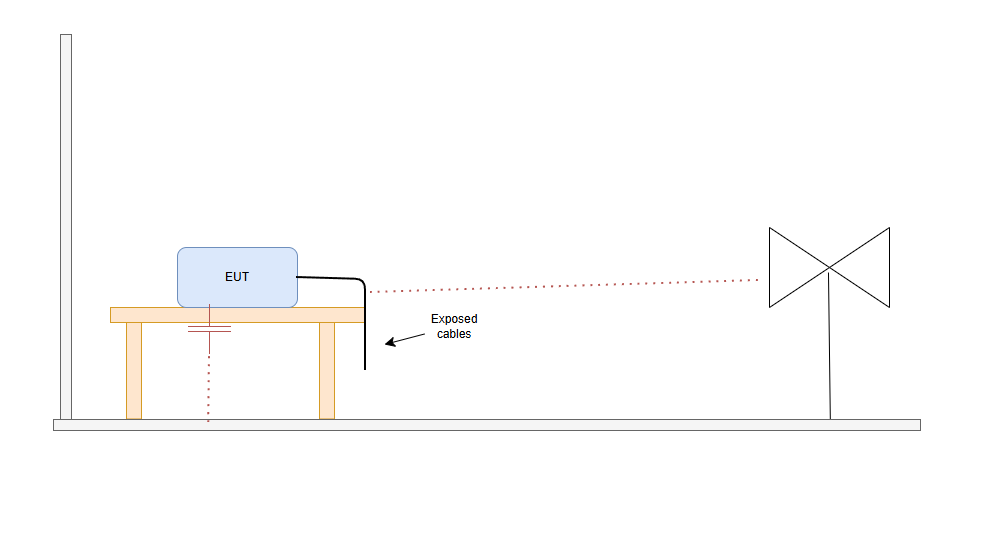
Why Moving the EUT Changes the Emissions Plot
Rotate the product, lift a cable, move it 20 cm, and the radiated emissions plot changes. That is not randomness: the cable is the antenna. How to read those changes while debugging.
Francesco Poderico · · 3 min read
EMC
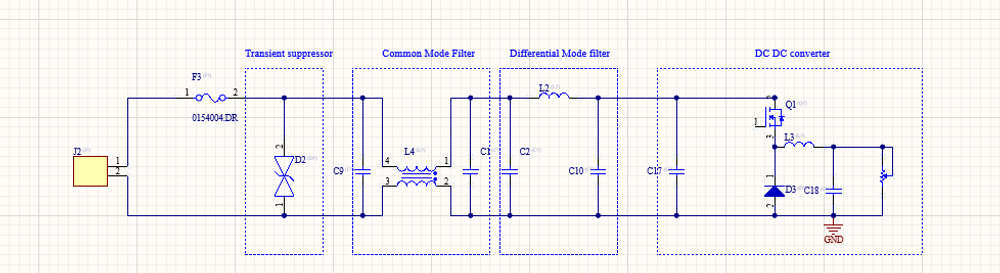
Power Supply Emissions: How I Separate Differential Mode from Common Mode
One bench test tells you whether DC/DC converter emissions are differential or common mode: change the load and watch the amplitude. What each result means and where to fix.
Francesco Poderico · · 3 min read
EMC
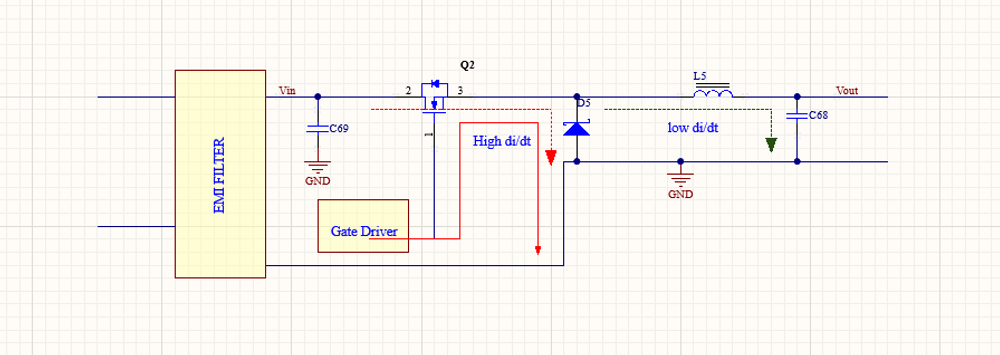
Identifying Low di/dt and High di/dt Currents in DC‑DC Converters
Not all currents in a switching converter matter equally for EMI. How to identify the high di/dt loops, why they dominate emissions, and the layout and gate-driver choices that tame them.
Francesco Poderico · · 4 min read