

Any electronic product must be compliant with the appropriate EMC (Electromagnetic Compatibility) therefore the designer engineer should select the right EMC standard right at the beginning. This increases your chances that your product will pass EMC testing and be legally placed on the market in regions like the UK, EU, and US.
Different product types require different standards - and the earlier you identify which ones apply to your product, the more efficient your development process will be. Using this guide, you can determine which product category your product belongs to.

The following are common product categories and what they cover:
Radio (EMC)
Products with built-in radios, like Wi-Fi, Bluetooth, or mobile communications, must meet specific EMC requirements to ensure they don’t interfere with other wireless devices.
| EN 301 489-1 |
| Electromagnetic compatibility and Radio spectrum Matters (ERM); ElectroMagnetic Compatibility (EMC) standard for radio equipment and services; Part 3: Specific conditions for Short-Range Devices (SRD) operating |
| EN 301 489-3 |
| Electromagnetic compatibility and Radio spectrum Matters (ERM); ElectroMagnetic Compatibility (EMC) standard for radio equipment and services; Part 3: Specific conditions for Short-Range Devices (SRD) operating |
| EN 301 489-12 |
| ElectroMagnetic Compatibility (EMC) standard for radio equipment and services; Part 12: Specific conditions for Very Small Aperture Terminal, Satellite Interactive Earth Stations operated in the frequency ranges |
| EN 301 489-17 |
| ElectroMagnetic Compatibility (EMC) standard for radio equipment and services; Part 17: Specific conditions for Broadband Data Transmission Systems; Harmonised Standard for ElectroMagnetic Compatibility |
| EN 301 489-52 |
| ElectroMagnetic Compatibility (EMC) standard for radio equipment and services; Part 52: Specific conditions for Cellular Communication User Equipment (UE) radio and ancillary equipment; Harmonised Standard for |
Radio (Verification)
In addition to EMC, this applies to radio performance. You should perform this test when you don't use a prequalified module. Design phases this way are usually expensive, but if you're doing high volume, it's probably the best method.
| EN 300 220-1 |
| Short Range Devices (SRD) operating in the frequency range 25 MHz to 1 000 MHz; Part 1: Technical characteristics and methods of measurement |
| EN 300 328 |
| Wideband transmission systems; Data transmission equipment operating in the 2.5 GHz band |
| EN 300 330-1 |
| Electromagnetic compatibility and radio spectrum matters (ERM); short range devices (SRD); radio equipment in the frequency range 9 kHz to 25 MHz and inductive loop systems in the frequency range 9 kHz to 30 |
| EN 300 330-2 |
| Electromagnetic compatibility and Radio spectrum Matters (ERM); Short Range Devices (SRD); Radio equipment in the frequency range 9 kHz to 25 MHz and inductive loop systems in the frequency range 9 kHz to 30 |
| EN 300 440-2 |
| Electromagnetic compatibility and Radio spectrum Matters (ERM); Short range devices; Radio equipment to be used in the 1 GHz to 40 GHz frequency range; Part 2: Harmonized EN covering the essential |
| EN 301 428 |
| Satellite Earth Stations and Systems (SES); Harmonised Standard for Very Small Aperture Terminal (VSAT); Transmit-only, transmit/receive or receive-only satellite earth stations operating in the 11/12/14 GHz |
| EN 301 511 |
| Global System for Mobile communications (GSM); Mobile stations (MS) equipment; harmonised standard covering the essential requirements of article 3.2 of Directive 2014/53/EU |
| EN 301 893 |
| Broadband Radio Access Networks (BRAN); 5 GHz high performance RLAN; Harmonized EN covering the essential requirements of article 3.2 of the R&TTE Directive |
| EN 301 908 |
| IMT cellular networks; Harmonised Standard for access to radio spectrum; Part 23: Active Antenna System (AAS) Base Station (BS); Release 15 |
| EN 301 908-1 |
| IMT cellular networks; Harmonised Standard for access to radio spectrum; Part 1: Introduction and common requirements Release 15 |
| EN 302 065-2 |
| Short Range Devices (SRD) using Ultra Wide Band technology (UWB); Harmonised Standard covering the essential requirements of article 3.2 of the Directive 2014/53/EU; Part 2: Requirements for UWB location |
Mains Harmonics
Covers how your product affects the quality of power on the mains supply. Products drawing power in a “choppy” or non-linear way can distort the mains and need to be tested against harmonics limits.
| EN IEC 61000-3-11 (IEC 61000-3-11) |
| Electromagnetic compatibility (EMC) - Part 3-11: Limits - Limitation of voltage changes, voltage fluctuations and flicker in public low-voltage supply systems - Equipment with rated current ≤ 75 A and subject to |
| EN IEC 61000-3-12 (IEC 61000-3-12) |
| Electromagnetic compatibility (EMC) Part 3-12: Limits - Limits for harmonic currents produced by equipment connected to public low-voltage systems with input current > 16 A and ≤ 75 A per phase |
| EN IEC 61000-3-2 (IEC 61000-3-2) |
| EMC Limits for harmonic current emissions (equipment input current ≤ 16 A per phase) |
Flicker
Looks at short-term variations in current draw that can cause visible flicker in lighting systems. Standards here protect against annoying or even harmful lighting disturbances.
| EN 61000-3-3 (IEC 61000-3-3) |
| EMC Limitation of voltage changes, voltage fluctuations and flicker in public low-voltage supply systems, for equipment with rated current ≤ 16 A per phase andnot subject to conditional connection |
Multimedia
Includes TVs, audio equipment, PCs, monitors, and similar devices.
| Emissions |
| EN 55032 (CISPR 32) |
| Electromagnetic compatibility of multimedia equipment - Emission requirements (CISPR 32 + CISPR 32) |
| Immunity |
| EN 55035 (CISPR 35) |
| Electromagnetic compatibility of multimedia equipment - Immunity requirements |
Generic
For products that don't clearly fit into a specific standard. There are separate generic standards for residential and industrial environments. A good starting point if no product-specific standard applies.
| Emissions |
| EN 61000-6-3 (IEC 61000-6-3) |
| Emission standard for equipment in residential, commercial and light industrial environments |
| EN 61000-6-4 (IEC 61000-6-4) |
| Emission standard for industrial environments |
| EN 61000-6-8 (IEC 61000-6-8) |
| Emission standard for professional equipment in commercial and light industrial |
| Immunity |
| EN 61000-6-1 (IEC 61000-6-1) |
| Immunity standard for residential, commercial and light-industrial environments |
| EN 61000-6-2 (IEC 61000-6-2) |
| Immunity standard for industrial environments |
| EN 61000-6-5 (IEC 61000-6-5) |
| Immunity standard for equipment used in power station and substation environment |
Laboratory
Applies to lab instruments and test equipment. Covers EMC for precision equipment often used in controlled environments.
| EN IEC 61326-1 (IEC 61326-1) |
| Electrical equipment for measurement, control and laboratory use |
| EN IEC 61326-2-1 (IEC 61326-2-1) |
| Electrical equipment for measurement, control and laboratory use. Test configurations, operational conditions and performance criteria for sensitive test and measurement equipment or EMC unprotected |
| EN IEC 61326-2-3 (IEC 61326-2-3) |
| Electrical equipment for measurement, control and laboratory use. Test configurations, operational conditions and performance criteria for transducer with integrated or remote signal conditioning |
| EN IEC 61326-2-6 (IEC 61326-2-6) |
| Electrical equipment for measurement, control and laboratory use. In vitro diagnostic (IVD) medical equipment |
Lift
Standards for elevator (lift) control systems and motor drives. Ensures the electronics used in lifts operate reliably and safely under electromagnetic interference.
| EN 12015 |
| Product family standard for lifts, escalators and moving walks. Emission |
| Standards: |
| EN 12016 |
| Product family standard for lifts, escalators and moving walks. Immunity |
Alarm & accessory systems
Applies to security alarm systems (intruder alarms, fire alarms, etc.). EMC compliance ensures they continue to function correctly even in the presence of interference.
| Emissions: |
| EN 61000-6-3 |
| Componets of fire, intruder, hold up, cctv, access control and social alarm systems |
| EN 61000-6-3 |
| Electronic access and control systems |
| EN 61000-6-3 |
| Electronic access and control systems based on Web services |
| Immunity: |
| EN 50130-4 |
| Componets of fire, intruder, hold up, cctv, access control and social alarm systems |
| EN 60839-11-1 |
| Electronic access and control systems |
| EN 60839-11-32 |
| Electronic access and control systems based on Web services |
Hearing Aids
Ensures hearing aids are not affected by nearby electronic devices and also do not cause interference to other systems.
| EN 60118-13 (IEC 60118-13) |
| Electroacoustics - Hearing aids - Immunity to mobile digital wireless devices |
Medical
Strict EMC requirements for medical equipment to prevent malfunction that could endanger patient safety. These standards are more rigorous than for general devices.
| EN 60601-1-2 (IEC 60601-1-2) |
| Medical electrical equipment - basic safety and essential performance. |
Household
Applies to typical domestic appliances: vacuum cleaners, washing machines, kettles, etc. Ensures that everyday appliances don’t interfere with each other.
| Emissions: |
| EN IEC 55014-1 (CISPR 14-1) |
| Emissions standard for household appliances for electric tools and similar apparatus |
| Immunity |
| EN IEC 55014-2 (CISPR 14-2) |
| Immunity standard for household appliances for electric tools and similar apparatus |
| Harmonics and interharmonics |
| EN 60730-1 (IEC 60730-1) |
| Automatic electrical controls |
| Emissions and Immunity |
| EN 60730-2-5 (IEC 60730-2-5) |
| Automatic electrical controls - electrical burner control systems |
| EN 60335-1 (IEC 60335-1) |
| Household and similar electrical appliances Safety Part 1 - General requirements |
Railway
EMC standards for equipment used on trains or near railway infrastructure. Covers emissions and immunity to ensure train systems operate safely.
| Emissions: |
| EN 50121-2 |
| Emissions of the whole railway system |
| Immunity: |
| EN 50121-3-1 |
| Rolling stock. Train and complete vehicle |
| EN 50121-3-2 |
| Rolling stock. Apparatus |
| EN 50121-4 |
| Signalling and telecommunications apparatus |
| EN 50121-5 |
| Fixed power supply installations and apparatus |
Lighting Luminaires
Covers EMC for lamps, LEDs, and their drivers or ballasts. Ensures lighting does not cause radio interference or get affected by other sources.
| Emissions: |
| EN 55015 (CISPR 15) |
| Limits and methods of measurement of radio disturbance characteristics of electrical lighting and similar equipment |
| Immunity: |
| EN 61547 (IEC 61547) |
| Equipment for general lighting purposes |
Alarm Gases & Automatic Burners
For gas detection systems and automated burners (like in boilers). EMC standards ensure these safety-critical devices work correctly in the presence of electrical noise.
| Emissions and Immunity: |
| EN 50270 |
| Electrical apparatus for the detection and measurement of combustible gases, toxic gases or oxygen |
Automotive
Applies to electronics used in vehicles, including engine control units, infotainment, and safety systems. Automotive EMC is a specialised area due to the harsh electrical environment.
| UN Regulation No. 10.06 |
| Uniform provisions concerning the approval of: Vehicles with regards to EMC |
ISM (Industrial, Scientific, Medical)
e.g. if you are designing product that needs to be used in one of any of the above industries/
| Emissions: |
| EN 55011 (CISPR 11) |
| Industrial, scientific and medical (ISM) equipment |
Electricity Metering Equipment
Includes smart meters and electricity usage monitors. Standards ensure they communicate reliably and are not affected by household interference.
| N 50470-1 |
| Electricity metering equipment |
Arc Welding
Welding equipment generates strong electromagnetic fields. EMC standards in this category ensure these emissions are controlled and safe.
| Emissions and Immunity: |
| EN 60974-10 (IEC 60974-10) |
| Arc Welding Equipment |
Traffic Signal
Applies to roadside electronics like traffic lights and signs. Ensures they remain visible and functional in high-interference environments.
| EN 50293 |
| Road traffic signal systems |
Maritime
EMC requirements for ships, boat electronics, and communications. Maritime environments have unique challenges due to large metal structures and strong RF sources.
| EN 60945 (IEC 60945) |
| Maritime navigation and radio communication equipment and systems |
PowerDrive
Covers motor drives and variable speed drives. These can produce a lot of electrical noise, so strict EMC controls are needed.
| EN 61800-3 (IEC 61800-3) |
| Adjustable speed electrical power drive systems - Part 3: EMC and specific test methods for PDS and machine tools |
Switchgear – Proximity Switches
For industrial control systems like contactors, relays, and proximity sensors. EMC testing ensures accurate and safe switching under noisy conditions.
| EN 60947-5-2 (IEC 60947-5-2) |
| Low-voltage switchgear and controlgear - Control circuit devices and switching elements. Proximity switches |
RCD (Residual Current Devices)
Applies to protective devices that trip on leakage current. They must not be falsely triggered by EMC interference and must also not cause emissions themselves.
| EN 61543 (IEC 61543) |
| Residual current-operated protective devices (RCDs) for household and similar use EMC |
Low Voltage Power Supply
External and internal power supplies (AC-DC and DC-DC converters). EMC standards control emissions and immunity, especially important for switch-mode power supplies.
| EN 62040-2 (IEC 62040-2) |
| Emissions and immunity standard for uninterruptible power systems (UPS) |
Basic Immunity Standa
| ESD |
| EN 61000-4-2 (IEC 61000-4-2) |
| EMC Electrostatic discharge immunity test |
| Radiated Immunity |
| EN 61000-4-3 (IEC 61000-4-3) |
| EMC radiated, radio-frequency, electromagnetic field immunity test |
| Fast Transient |
| EN 61000-4-4 (IEC 61000-4-4) |
| EMC Electrical fast transient / burst immunity test |
| Surge |
| EN 61000-4-5 (IEC 61000-4-5) |
| EMC Surge immunity test |
| Conducted Immunity |
| EN 61000-4-6 (IEC 61000-4-6) |
| EMC Immunity to conducted disturbances, induced by radio-frequency fields |
| Magnetic Immunity |
| EN 61000-4-8 (IEC 61000-4-8) |
| EMC power frequency magnetic field immunity test |
| Proximity Magnetic Immunity |
| EN 61000-4-39 (IEC 61000-4-39) |
| Radiated fields in close proximity |
| Magnetic Field Immunity |
| EN 61000-4-9 (IEC 61000-4-9) |
| Impulse magnetic field |
| Damped Oscillatory Magnetic Field |
| EN 61000-4-10 (IEC 61000-4-10) |
| Damped Oscillatory magnetic field |
| Voltage Dips and Interrups |
| EN 61000-4-11 (IEC 61000-4-11) |
| EMC Voltage dips, short interruptions and voltage variations immunity tests for equipment with input current up to 16 A per phase |
| EN 61000-4-34 (IEC 61000-4-34) |
| Voltage dips, short interruptions and voltage variations for equipment with mains current more than 16A per phase |
| Harmonics and Interharmonics |
| EN 61000-4-13 (IEC 61000-4-13) |
| Harmonics and interharmonics including mains signalling at AC power port, low frequency |
| EN 61000-4-20 (IEC 61000-4-20) |
| Transverse electromagnetic (TEM) waveguides |
Emission Basic Standard
These define the base methods for measuring radiated and conducted emissions. Used when a full product standard refers to them, or in custom testing setups.
| EN 55011 (CISPR 11) |
| Industrial, scientific and medical (ISM) equipment |
| EN 55012 (CISPR 12) |
| Vehicle, boats and internal combustion enginges. Radio disturbance characteristics. Measurement for the protection of off-board receivers |
| EN 55025 (CISPR 25) |
| Vehicle, boats and internal combustion enginges. Radio disturbance characteristics. Measurement for the protection of on-board receivers |
| EN 55032 (CISPR 32) |
| Electromagnetic compatibility of multimedia equipment - Emission requirements (CISPR 32 + CISPR 32) |
| EN 61000-3-2 (IEC 61000-3-2) |
| Limits for harmonic current emissions (equipment input current ≤16 A per phase |
| EN 61000-3-3 (IEC 61000-3-3) |
| Limitation of voltage changes, voltage fluctuations and flicker in public low-voltage supply systems, for equipment with rated current ≤16 A per phase and not subect to conditional connection |
| EN 61000-3-11 (IEC 61000-3-11) |
| Limitation of voltage changes, voltage fluctuations and flicker in public low-voltage supply systems. Equipment with rated current ≤75 A and subject to conditional connection |
| EN 61000-3-12 (IEC 61000-3-12) |
| Limits for harmonic currents produced by equipment connected to public low-voltage systems with input current >16 A and ≤75 A per phase |
Written by Francesco Poderico
More on EMC
EMC
Why Moving the EUT Changes the Emissions Plot
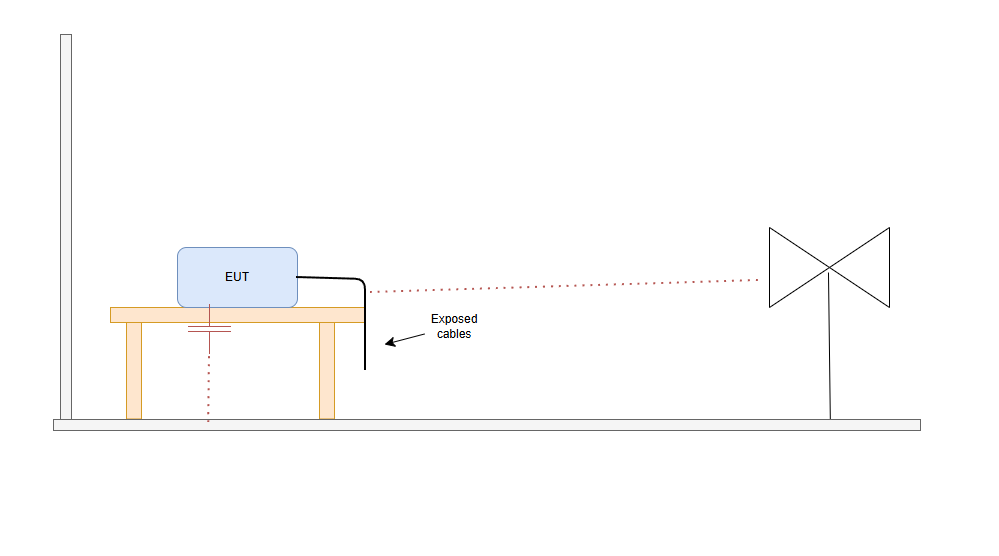
1. Introduction – why a small change can make great differences in the plot Did this happen to you. You go to the testing lab. you do a full RE scan and the scan looks great. Then you - Rotate the EUT 90° - Lift a cable - Move the EUT by 20 cm - Change cable routing And the emissions plot change
Francesco Poderico · · 3 min read
EMC
Power Supply Emissions: How I Separate Differential Mode from Common Mode
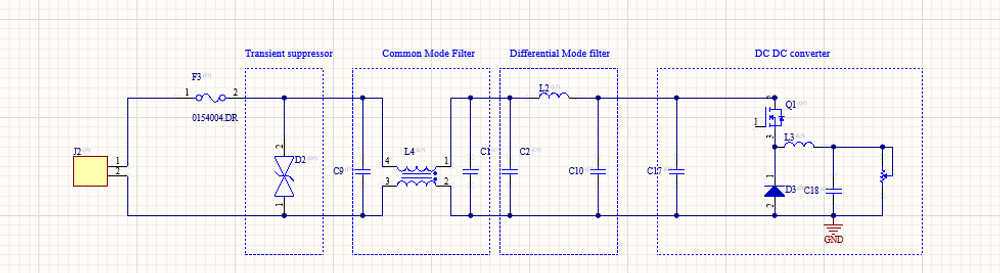
When I debug EMC problems on a DC/DC converter, I use a very simple test to understand whether the dominant mechanism is Differential Mode (DM) or Common Mode (CM). The test is simple: I increase the load and observe what happens to the emissions. If: - The peak frequencies stay the same,
Francesco Poderico · · 3 min read
EMC
Identifying Low di/dt and High di/dt Currents in DC‑DC Converters
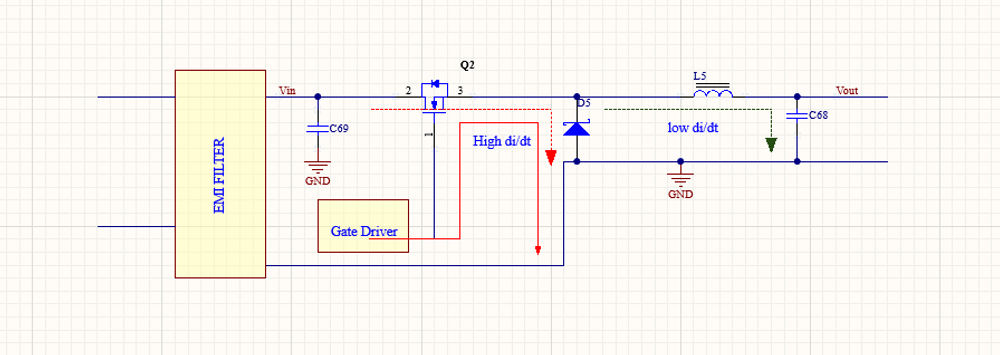
Introduction In switch‑mode DC‑DC converters, not all currents are equal from an EMC, signal integrity, or reliability perspective. A critical distinction must be made between low di/dt current paths and high di/dt current paths. Misidentifying these paths is one of the most common root c
Francesco Poderico · · 4 min read